Lamborghini Temerario Boss on the V8 Switch and Pushing the Limits of Power

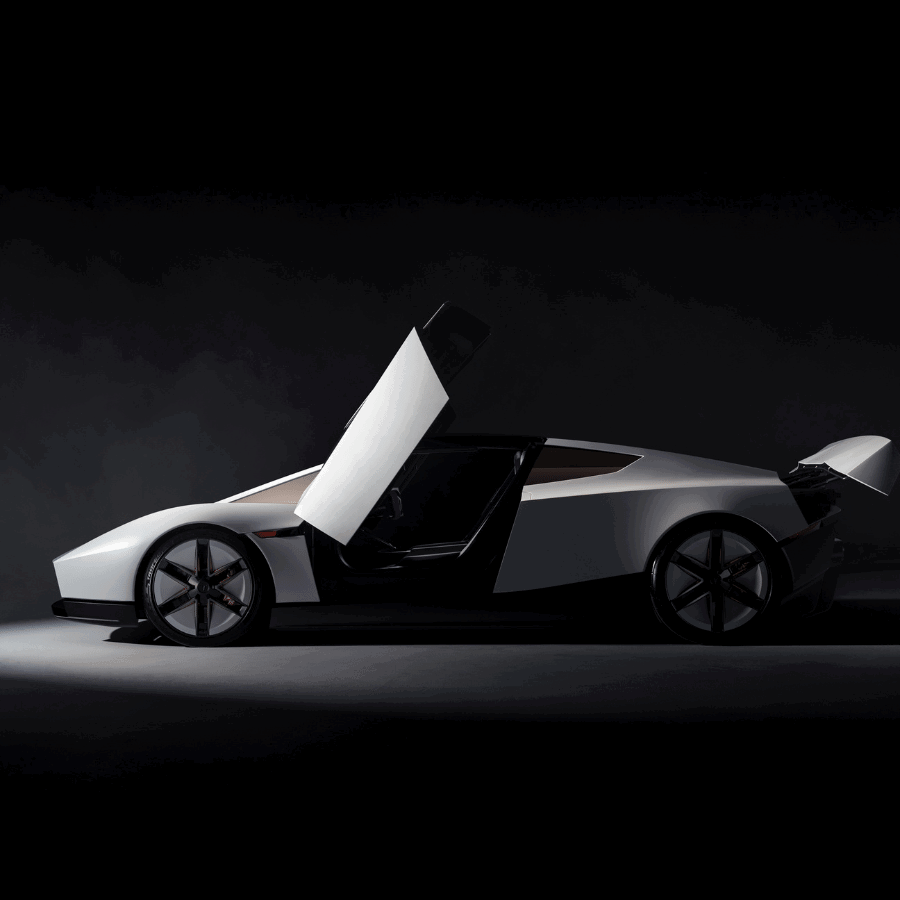
Cars have been getting more powerful ever since Carl Benz first rolled out his two-thirds-of-a-horsepower Patent-Motorwagen in 1886. This shouldn’t be a revelation to anyone, but over the last decade or so, things have arguably been getting a bit out of hand. Just look at Lamborghini’s 21st century lineage of ‘junior’ supercars, for instance.
The V10 models kicked off with the original 493bhp Gallardo in 2003, and by the time that engine first reached its most powerful form in 2017 in the Huracan Performante, it was making 631bhp, a substantial but not ludicrous 138bhp gain. But now, the Huracan’s replacement, the V8 hybrid Temerario, makes a combined 907bhp. Even if you deplete the batteries and drive around solely using the twin-turbo V8, you’ve got 789bhp beneath your right foot.

The result is that Lambo’s ‘entry-level’ supercar is now pushing almost 150bhp more than even the most powerful version of its previous flagship, the Aventador, which itself has been succeeded by the even more power-crazed 1,001bhp Revuelto. These are the kinds of figures you can only truly exploit with a runway or an FIA Grade 1 racetrack at your personal disposal, so where exactly does it end? At this year’s Goodwood Festival of Speed, we posed the question to Paolo Rachetti, Lamborghini’s product line director for the Temerario.
“I have 35 years of experience, and we are always saying we have touched the limit and then we are adding and adding and adding,” Rachetti tells us. “But I can tell you that the future now, what I feel personally, is to grow driveability. [This is] why we really think this hybrid architecture is better, because it’s enhancing the variability of the car, and the level of confidence for the driver, and also the level of recovery from any kind of driving mistake.

“That doesn’t mean that the car drives by itself. It means that through the level of control that we have, the calibration of the engine, we can have the driving emotion that we want to have.” Software looks set to play an increasing role in future Lamborghini supercars, then, which won’t be welcome news for those mourning the death of the Huracan’s raw, atmospheric V10, but you can’t blame Lamborghini for leaning into it. Car companies, especially ones competing at this end of the market, are increasingly facing a dilemma.
Electric and, to an extent, even hybrid performance cars are decried by enthusiasts and shunned by wealthy buyers, and yet ever-tighter emissions and noise regulations are making noisy, electrification-free supercars nigh-on impossible to sell. Simultaneously, power figures have swelled to unusably massive levels, and yet it’d be a marketing disaster for a company to launch a car with less power than the one it replaces.

The result is a supercar market saturated by machines that are, on a technical level, mighty achievements, but seem to lack the emotion and sparkle of their predecessors, a criticism the Temerario has been far from immune to.
Understandably, Rachetti and his team have worked hard to try and bring the emotionality back in different ways. Notably, the Temerario’s V8 revs to an astounding 10,000rpm, although the actual impact of this is debatable when its tone is flattened by turbochargers and noise regulations, but Rachetti maintains it was the right course of action (likely the only one, given the increasing regulatory hurdles cars like this face).

“Of course, it’s a turbo [engine], so we know there are some constraints, and also the homologation rules are more severe compared to several years ago, and this is something we have to play around. The idea was to bring not only the sound to the cabin, but also the vibration… So, you can perceive that the engine is growing also through the steering wheel. We are giving you the idea that the engine is talking.”
Our brief go on track in a Temerario last year showed us that this is more than just empty PR fluff, and Rachetti also talks plenty about the incredible torque vectoring abilities afforded by an electric front axle, something that unquestionably helps mask the Temerario’s heft (over 1.8 tonnes once fluids and a driver are onboard).

Still, there are plenty yet to be sold on the Temerario, but one thing’s worth remembering. When the Huracan first launched in 2014, reviews weren’t exactly bursting with praise. The same goes for the Gallardo back in 2003, and yet by the end of their lives and a decade of development, both of those cars had earned rightful places in the Supercar Hall of Fame.
By pure dint of its less charismatic engine, the Temerario undoubtedly has a higher mountain to climb, but we certainly wouldn’t write it off just yet. As Rachetti concludes by telling us: “You will see several surprises in the future… A new architecture gives you a lot of opportunities to cover every kind of niche.” Watch this space, then.

Currently a freelance journalist, Mike previously worked full-time for Car Throttle as a staff writer between 2024 and 2026.



Comments