The Tiny Smart Fortwo Successor Is Nearly Ready

After spending the past few years producing cars considerably larger than its name would suggest, Smart is getting ready to become properly small again.
The new Smart #2, seen as a spiritual successor to the much-loved Fortwo, is currently undergoing an extensive testing programme ahead of its full reveal at the Paris Motor Show in October.

Still hidden beneath some fairly headache-inducing black-and-white camouflage, the two-seat EV is being subjected to all the usual pre-production punishment - including emergency lane changes, slippery roads, potholes and repeated encounters with kerbs.
In a recent release, Smart says its engineers are continuing to refine the car’s steering, suspension and chassis to make sure it remains stable and responsive, all the while retaining the manoeuvrability expected of something designed primarily for crowded city streets.
Although the company hasn’t revealed the #2’s exact dimensions, the prototype retains the familiar wheels-at-the-corners proportions of the original Fortwo. Smart says this layout will help maximise the car’s interior space while giving it the agility needed to squeeze through tight streets and into even tighter parking spaces.

The testing programme isn’t entirely focused on chucking it over potholes, either. Smart has also been working to keep noise and vibrations to a minimum, testing the #2 in wind tunnels, acoustic chambers and on a variety of road surfaces.
Even different tyre compounds have been trialled on rough asphalt, grooved concrete and high-speed straights in an effort to balance low rolling resistance, range and road noise.
The #2 will also revive Smart’s tridion safety cell, the distinctive structural shell that formed the basis of previous Fortwo models. The latest version has been redesigned to meet modern safety requirements while retaining the car’s compact exterior dimensions.
But unlike the original Fortwo, there will be no petrol-powered version. The #2 will be fully electric - having been developed jointly by Smart’s research and development teams and Mercedes-Benz’s design department.
Technical details remain under wraps for now, so there’s still no word on battery capacity, range, power or pricing. We won’t have too much longer to wait, though, with the production version set to make its world debut in Paris this October.

Its arrival comes as Europe appears to be rediscovering the appeal of genuinely small cars.
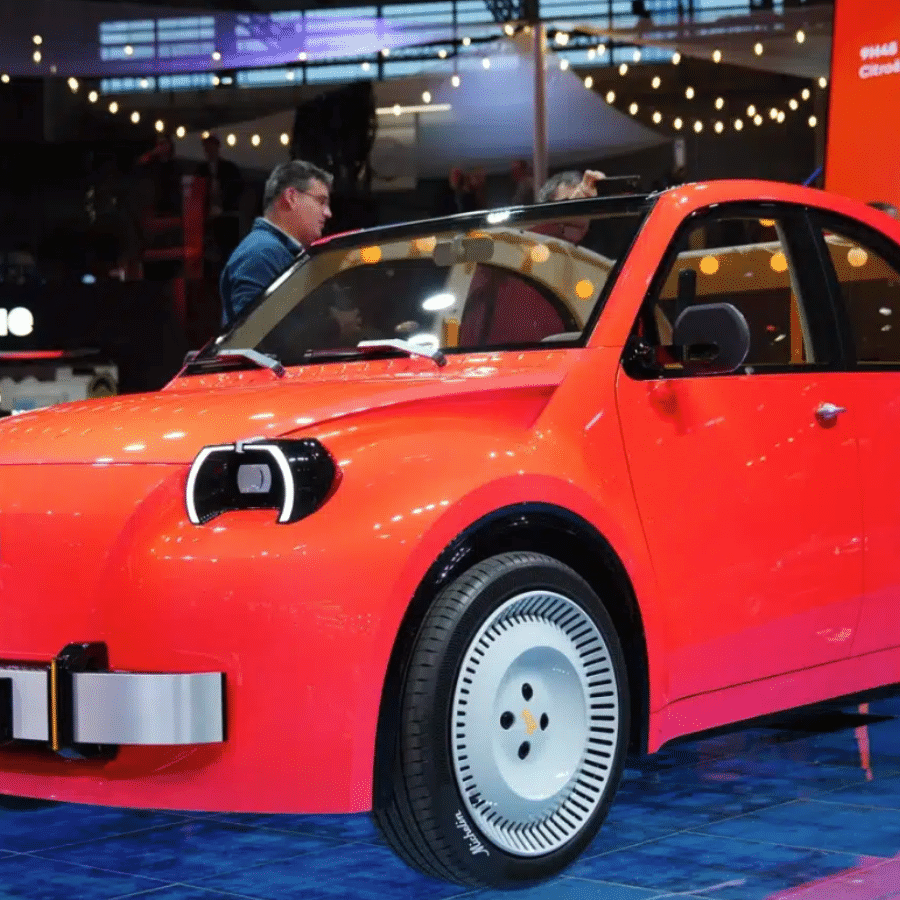
Alongside Japan-inspired EVs like the Honda Super-N and Suzuki’s upcoming Vision e-Sky-based model, the reborn Renault Twingo, the upcoming Citroen 2CV and even concepts such as the Dacia Hipster suggest tiny, affordable and characterful city cars could be making a proper comeback. Perhaps that’s no surprise when seemingly every local town centre is now packed to the brim with oversized SUVs.
After the much larger #1, #3 and #5, the #2 could finally be the Smart that feels most like a proper Smart again.



Comments