The 10 Greatest Sports Saloons Of All Time

Sports saloons offer the best of both worlds. They have the space and practicality of a four-door car, with the performance and character of something much more fun.
Over the years, that has given us everything from touring-car-inspired homologation specials to V8-powered family cars. These are ten of the greatest sports saloons ever made.
Mercedes-Benz 190E 2.5-16 Evolution II

While the Mercedes 190E was designed as a sensible compact saloon, the Evolution II was anything but. Created to homologate Mercedes’ latest developments for touring-car racing, it arrived with bulging wheelarches, an adjustable front splitter and one of the largest rear wings ever fitted to a four-door car.
Its 2.5-litre four-cylinder engine produced 235bhp, while changes to the suspension and aerodynamics made it far more serious than the regular 190E 2.5-16. Just 502 were built, all finished in blue-black metallic, and it remains one of the most recognisable Mercedes performance cars ever made.
Ford Sierra Sapphire RS Cosworth

The original three-door Sierra RS Cosworth was hardly subtle, but Ford made the same basic formula much easier to live with by putting it into the four-door Sapphire. The enormous rear wing disappeared, leaving a much more restrained-looking family saloon - but with genuine motorsport pedigree.
Under the bonnet was a turbocharged 2.0-litre Cosworth engine, initially driving the rear wheels. A later version gained four-wheel drive and 220bhp as Ford turned its attention towards rallying. It was fast, practical and far less conspicuous than the car that came before it.
Lotus Carlton

Perhaps the ultimate getaway car, the Lotus Carlton began life as an ordinary Vauxhall executive saloon - before being thoroughly reworked into one of the fastest cars of its era.
Its relatively discreet Imperial Green bodywork hid performance that could embarrass many contemporary supercars. Lotus achieved this by enlarging the Carlton’s straight-six to 3.6 litres, added two turbochargers and increased output to 377bhp. Power went to the rear wheels through a six-speed manual gearbox, while the suspension, brakes and steering were all upgraded.
With a top speed of 176mph, it was so fast that its suitability for public roads was seriously questioned at the time.
Mitsubishi Lancer Evolution VI Tommi Makinen Edition

Every generation of the Mitsubishi Lancer Evolution is revered by fans, but the Tommi Makinen Edition is arguably the most desirable of them all.
Introduced to celebrate Finnish legend Makinen winning four consecutive World Rally Championship drivers’ titles with Mitsubishi, this special edition was based on the Evo VI but received a revised turbocharger, quicker steering, a lower ride height and suspension tuned with Tarmac rally stages in mind.
Red examples could even be ordered with graphics inspired by Makinen’s rally car, creating one of the most recognisable Japanese performance saloons of the era.
BMW E39 M5

For many, the E39 remains the definitive BMW M5. It looked little different from an ordinary 5 Series, but underneath its somewhat restrained bodywork was everything needed to turn it into one of the finest performance saloons ever made.
It was the first M car to use a V8, with a naturally aspirated 4.9-litre engine producing 400bhp. The only gearbox offered was a six-speed manual, and all of that power was sent to the rear wheels. It could reach 62mph in 5.3 seconds, but its balance of comfort, performance and subtlety was more important than any single figure.
Audi B7 RS4

Audi had already established the RS4 name with the iconic estate-only model, but the B7 generation expanded it into a full range that included a saloon, Avant and cabriolet. For the first time, buyers could have a compact Audi RS with four doors and a conventional boot.
Its centrepiece was a naturally aspirated 4.2-litre V8 paired with a six-speed manual gearbox and quattro four-wheel drive. It sounded fantastic, loved to rev and felt more agile than many fast Audis that came before it. The fact it remained understated only made its performance more satisfying.
Mercedes-AMG C63 W204

Mercedes took a different approach to its rivals when creating the W204-generation C63 AMG. Instead of fitting a smaller, highly strung engine, it squeezed a naturally aspirated 6.2-litre V8 into the compact C-Class.
The result was 457bhp and one of the best-sounding V8s fitted to any saloon. It was powerful enough to overwhelm its rear tyres almost whenever requested, but there was also a properly capable chassis beneath the tyre smoke.
Cadillac CTS-V

America’s answer to a sports saloon, the Cadillac CTS-V was capable of taking on the best from Germany. It combined the sharp-edged looks and comfort expected of a Cadillac with the supercharged heart of a Corvette.
Its 6.2-litre V8 produced 556bhp and could be paired with either a six-speed manual or automatic gearbox. Magnetic Ride Control helped give it the handling to match its enormous straight-line performance, rather than leaving it as little more than a muscle car with four doors.
Alfa Romeo Giulia Quadrifoglio

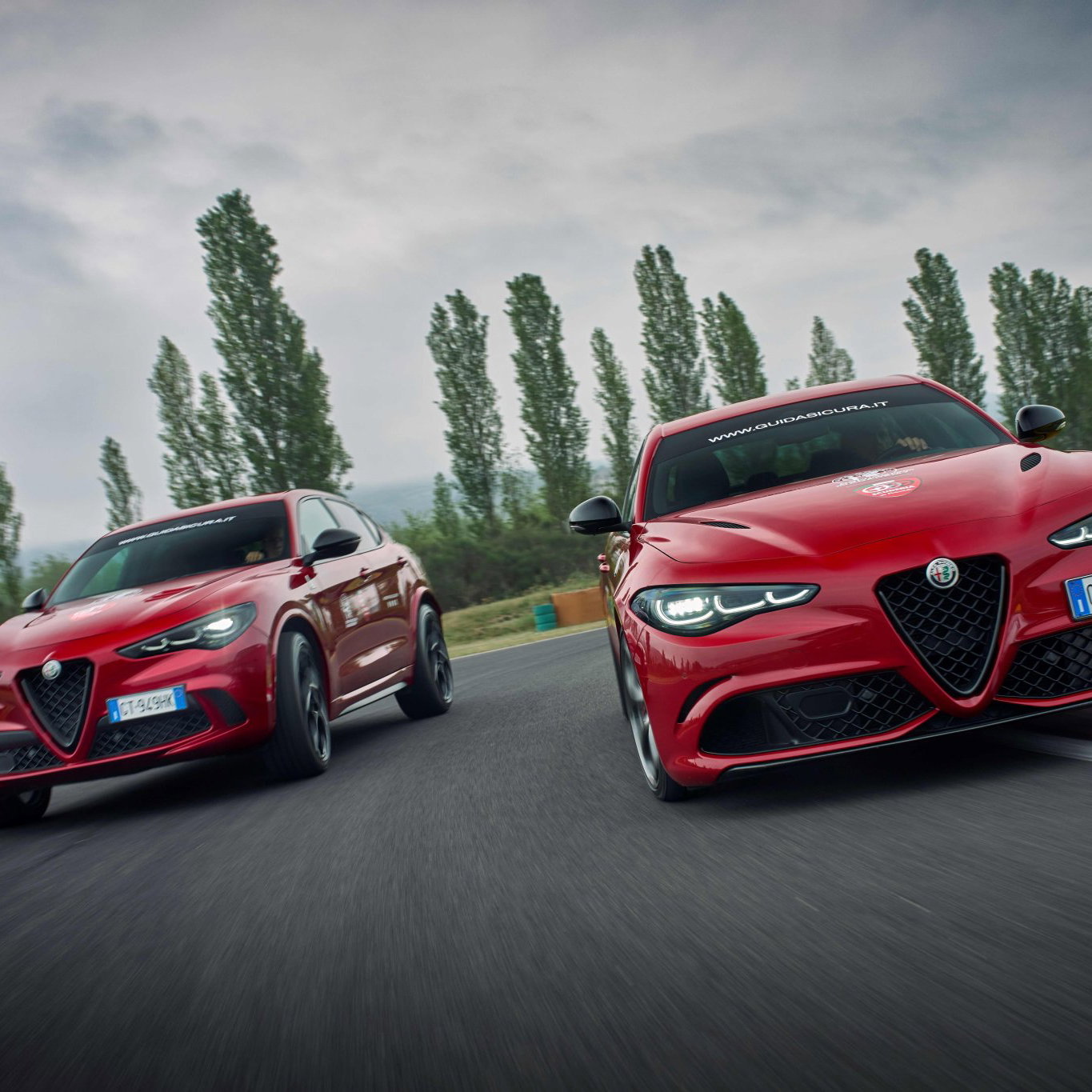
The Giulia Quadrifoglio marked Alfa Romeo’s return to the rear-wheel-drive sports saloon and immediately gave the BMW M3 and Mercedes-AMG C63 serious competition. It was beautiful, fast and packed with the character expected of a performance Alfa.
Its 2.9-litre twin-turbocharged V6 produced 510bhp, allowing it to reach 62mph in 3.9 seconds and continue to more than 190mph. A light body, quick steering and well-judged chassis made it feel every bit as special as those numbers suggested.
Jaguar XE SV Project 8

The XE SV Project 8 was far more than a quicker version of Jaguar’s compact saloon. Almost every major area was reworked, creating a limited-production four-door car designed with circuit performance in mind.
Its supercharged 5.0-litre V8 was coupled with an eight-speed automatic gearbox and an all-wheel-drive system. Huge aerodynamic additions, carbon-ceramic brakes and extensively modified bodywork helped it reach 60mph in 3.3 seconds and a top speed of 200mph. Only 300 were planned, making it one of the rarest and most extreme Jaguar road cars ever built.


Comments