2027 Renault Clio Hybrid Review

Pros
- Chuckable chassis, nice steeringGood cabin if spec'd right
Cons
- Noisy, coarse petrol engineThumpy ride on 18-inch wheels
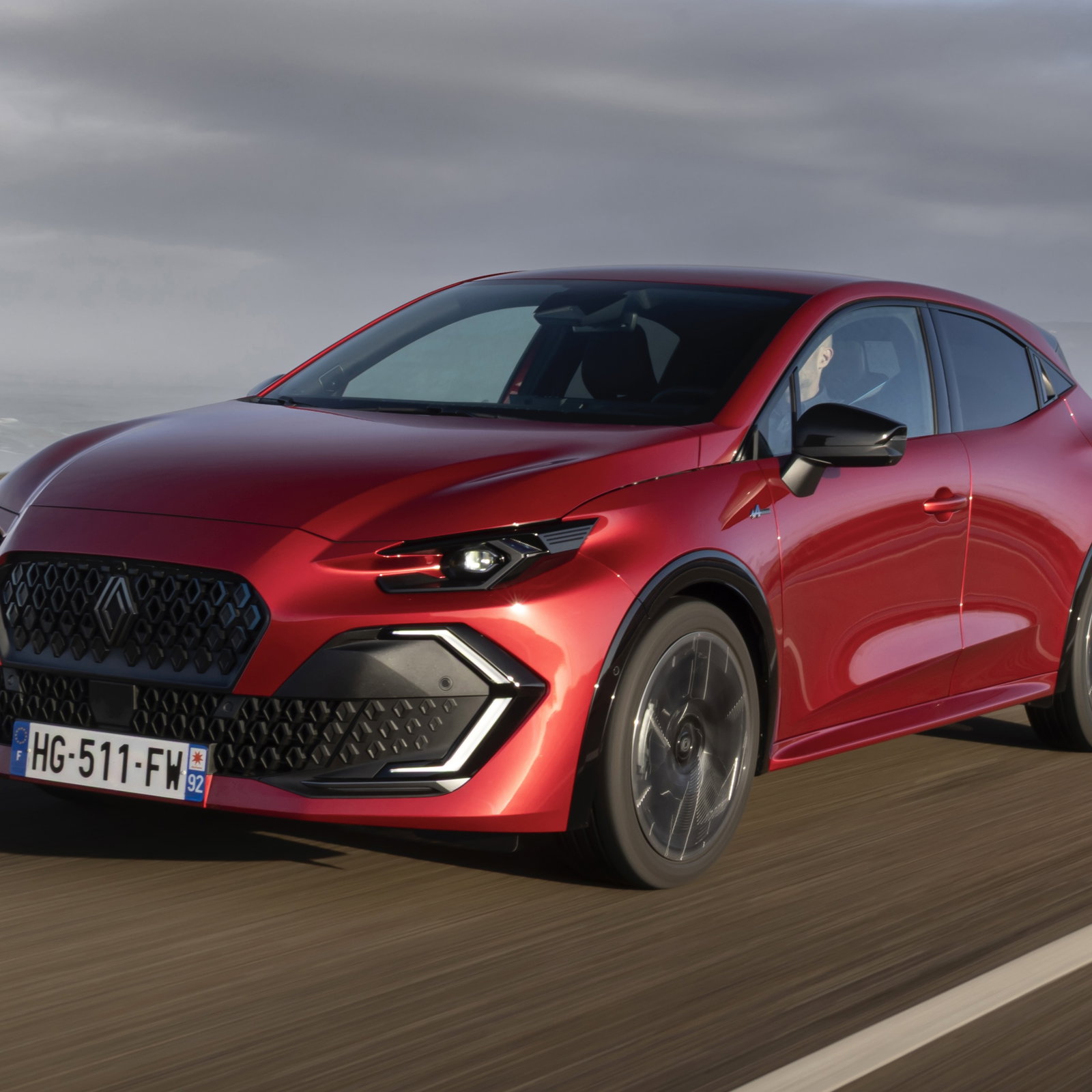
Wait, that’s the new Renault Clio? Looks a bit angry.
Doesn’t it just? This isn’t an accident – Renault’s taken a very much active decision to take the new Clio in a more aggressive, sportier direction. Nothing to do with the company’s retro EVs taking over the job of being cute and friendly, apparently – just the continuation of something that’s been happening gradually since the outgoing model arrived in 2019.
How do we feel about the results, though? It’s never worth dwelling too much on looks, because they’re so subjective, but they’ve been easily the biggest talking point around this sixth-gen Clio since it was unveiled earlier this year. We think it’s one of those better-in-person scenarios, but there’s still a lot of arguably clashing ideas in play, and we still feel the final product lands somewhere on the wrong side of generically aggressive.

Still, however you feel about the looks, there’s no denying this car’s importance to Renault. We may hear lots of hyperbole about the death of the petrol-powered hatchback, but the Clio – having sold some 17 million units since it launched in 1990 – is still a huge seller, the single best-selling car in Europe in the first half of 2025, no less. Put that in your crossover-shaped pipe and smoke it.
What engines can I get in it?
In Britain, you’ll have a choice of two. There’s an old-school, entry-level setup, a 1.2-litre turbocharged petrol three-cylinder, making 113bhp and hooked to a six-speed manual, but we’ve been driving the hybrid.
It’s the same setup you can get in the Dacia Bigster and soon, the Duster: a Horse-developed 1.8-litre naturally aspirated four-pot paired with an electric motor and a truly baffling clutchless gearbox setup that can drive the front wheels in no fewer than 15 different ways. This doesn’t really matter in practice, because you never notice the different gearbox modes – it just feels like a normal automatic, although you have no way of taking control of shifts yourself.

With this powertrain, peak combined power is 158bhp, while the highest possible torque figure – 151lb ft – comes solely from the e-motor. 0-62mph takes a quoted 8.3 seconds, while top speed is an electronically governed 112mph.
Amazingly, when the inevitable ‘will there be a hot one?’ question was raised in the press conference, Renault’s execs didn’t completely rule it out. If this really was more than a noncommittal we-don’t-comment-on-future-plans response, though, don’t hold your breath for a fizzing, naturally aspirated, manually-shifted riot like the Renaultsport Clios of old. Sadly, that kind of hot hatch just can’t really exist anymore.
Shame, but even a normal Clio should be good to drive, right?

It should, and this one is, at least in the handling department. The hybrid Clio weighs 1316kg – far from the sub-tonner it once was, but still pretty trim for a modern car, especially one that basically has two engines.
You can feel this relative lightness in the corners, where the Clio turns in keenly and stays flat. Our test route didn’t offer many opportunities to really push it (and let’s face it, it’s a hybrid hatchback – how many people are really going to go full car journo mode on it?), but what’s there feels like a solid baseline for that hot version that Renault may or may not make.

It’s helped particularly by its steering, which is weighty and immediate, much more so than lots of rivals, giving you an instant and satisfying response from the front end. There’s not much in the way of feel – show us a modern non-performance car where there is, but it seems to suggest that dynamics were near the top of the list of priorities with this car. A shout out, too, to the brake pedal, which offers surprising amounts of firmness and feedback for a relatively unsporty car.
We’re keen to try the basic petrol, manual version. That darty steering combined with an even lower weight – just 1155kg – and a low-power engine and gearbox that you can properly wring out in the finest small French car tradition could lead to a properly amusing little thing in the right circumstances.
What about the powertrain?

Ah. In the hybrid, that can sometimes spoil the fun a bit. On the plus side, when you’re just nipping around town, it does a good job of prioritising electric running, so you get typical EV smoothness and low-down shove. However, when the engine does kick in, it can be a coarse and noisy thing, loudly protesting when you give the throttle any kind of load.
That complicated gearbox doesn’t help matters, sometimes being slow to downshift and leaving the Clio feeling underpowered, despite its healthy output for a car of its size. This is especially true on long uphill stretches.
Renault has introduced a new ‘Smart’ drive mode in addition to the usual suite of Normal, Eco, Sport, etc. This is supposed to react to your inputs and adjust the drive mode on the fly, so if you’re just wafting round town, it’ll keep you in Eco, and if you mash the accelerator for an overtake, it’ll pop you into Sport. A neat idea, but not the most slickly executed – it seems you have to be going full Jean Ragnotti to force it into Sport mode, because a couple of big bootfuls of accelerator still didn’t see it make the change.

For all our complaints about this powertrain, though, it certainly nails the economy brief. Our drives returned indicated numbers of between 59 and 61mpg – a way off Renault’s quoted 72mpg combined figure, but certainly nothing to turn your nose up at.
A quick note on the ride, too. It’s generally pretty agreeable and fluid, but smaller bumps and potholes can send a big jolt through the car. This comes with the caveat that all our test cars came on 18-inch wheels – we drove both the range-topping Esprit Alpine, where 18s are standard, and the mid-range Techno, where they’re optional but were fitted here. We can’t be sure until we’ve tried the smaller 16s if these Max Power-spec alloys are the main reason for this thumpy nature, but we suspect they’re a big contributing factor.
Is it like an old Clio inside?

A bit rubbish, you mean? Not really. The basic dash architecture is the same as the one you’ll find on countless other Renaults, with dual 10-inch instrument and infotainment screens. As long as you have a tolerance for piano black, then most of the materials are more than acceptable for a car of this class, the Google-driven OpenR Link infotainment (standard on the Techno upwards) is one of the best around, and we’re eternally grateful for Renault’s ongoing commitment to its row of physical toggle switches for key controls and the instant ADAS-silencing My Safety button.
As well as the wheels, we think the cabin is another reason to give the Esprit Alpine a miss. In that top-spec car, the plastic strip that runs across the dash has a bizarre chromatic effect that’s supposed to look swishy and premium but really just looks like a cheap faux-titanium exhaust that someone might have slapped on a Peugeot 306 in about 2002. This is just simple black on lower-spec cars, and we think all the better for it. We prefer the fabric-wrapped dash to the Alcantara you get on the Esprit Alpine, too.

Space is pretty much as you’d expect for a supermini – fine in the front, but in the back, comfort will very much depend on a) how tall the rear occupants are and b) how far forward those in the front are sitting. Young kids will be fine, but try to fit four tall-ish adults in it, and acts of violence may ensue. Quelle surprise.
This all sounds fairly promising. When can I buy one?
Well, here’s the awkward bit. In most of Europe, the new Clio is going on sale in early 2026, but Renault took a while deciding whether it would come to Britain at all – a result of a lack of clarity around our government’s EV mandate and what sort of hybrids will be allowed under the planned 2030 ban on pure combustion cars, apparently.

It eventually said ‘oui’ to the UK market, but the um-ing and ah-ing means that the RHD version won’t arrive until an unspecified date in 2027. It’ll keep building the Mk5 Clio to tide us over until then, but you’ve got a bit of a wait if you’ve got your heart set on the new one. That means we’re still a while off finding out official pricing, but we think things will kick off at around £20,000 for the basic petrol manual and rise a few grand for the hybrid.
By then, new versions of the Peugeot 208 and Vauxhall Corsa twins shouldn’t be too far off. Then there's the VW Polo/Skoda Fabia/Seat Ibiza siblings – all getting on a bit, but still appealing – plus budget-friendly options like the MG3, Suzuki Swift and Renault’s own Dacia Sandero.

In other words, the Clio’s market segment is still a surprisingly competitive one. Whether the little Renault remains one of its stalwarts will depend mainly on how well its next generation of rivals stack up. Our first impressions, though, are cautiously optimistic, and the good news is that our two biggest reservations – the grumbly engine and thumpy ride – could potentially be solved by the 1.2-litre turbo engine and smaller wheels.
If you’re a small Renault loyalist and not yet ready to make the leap to one of the brand’s excellent EVs, then it’s reassuring to know the Clio is still there for you for now, and still fundamentally a good little car. Now, about that hot one…
The stats (Clio E-Tech Hybrid 160hp)
- Engine: 1.8-litre four-cylinder hybrid
- Gearbox: multi-mode automatic
- Power (bhp): 158
- Torque (lb ft): 151
- 0-62mph: 8.3 seconds
- Top speed: 112mph
- Weight: 1316kg
- Starting price: TBC

Currently a freelance journalist, Mike previously worked full-time for Car Throttle as a staff writer between 2024 and 2026.



Comments